
Injection Stretch Blow Moulding (ISBM)
Injection Stretch Blow Moulding (ISBM)
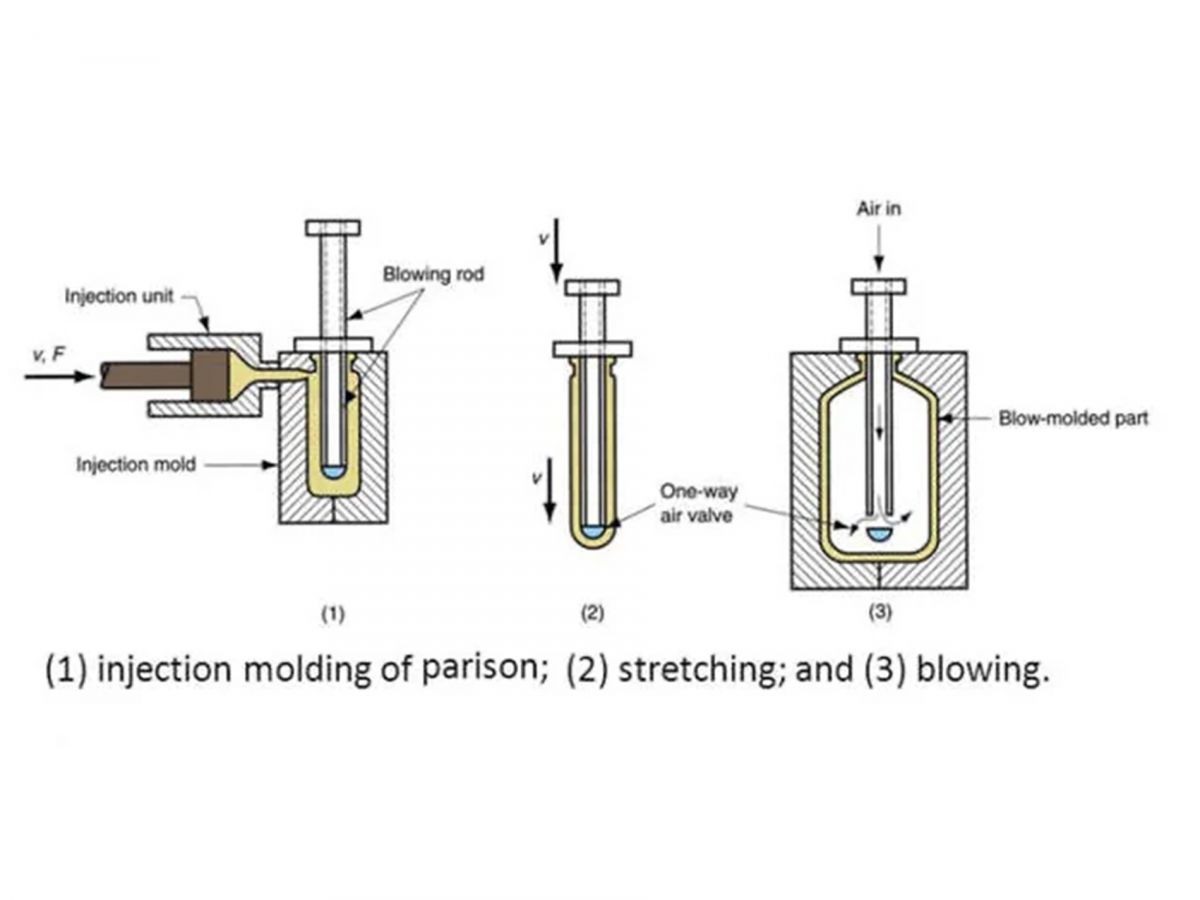
The process begins with the injection of molten polymer into a mould, where it solidifies and forms a preform. The preform is then reheated and stretched using a mechanical stretching rod before being inflated with pressurized air to conform to the desired container shape in the blow mould. Finally, the formed container is cooled and ejected from the mould.
Because the preform is stretched biaxially, axially by the stretch rod and radially by the blow air, the polymer chains become oriented in both directions, increasing the material's mechanical strength, transparency and barrier properties compared to an unstretched part.
ISBM can be carried out as a single-stage process, in which preform injection, conditioning, stretching and blowing all take place on the same machine, or as a two-stage process, where preforms are injection moulded separately, stored, and later reheated and blown on a dedicated stretch-blow machine.
PET is the most widely used material for this process, owing to its favourable stretching behaviour and the significant improvement in strength and clarity achieved through biaxial orientation, making ISBM the standard technology for producing bottles for carbonated beverages, water and other packaged liquids.
Il processo parte dalla formazione di una preforma stampata a iniezione. Poi questa viene riscaldata e stirata meccanicamente per mezzo dello stelo di stiratura all’interno dello stampo e quindi mediante aria compressa viene gonfiata fino ad assumere la forma dello stampo.
Infine il contenitore così formato viene raffreddato ed estratto.
Poiché la preforma viene stirata biassialmente, assialmente dall'asta di stiro e radialmente dall'aria di soffiaggio, le catene polimeriche si orientano in entrambe le direzioni, migliorando la resistenza meccanica, la trasparenza e le proprietà barriera del materiale rispetto a un pezzo non stirato.
L'ISBM può essere realizzato come processo a stadio singolo, in cui iniezione della preforma, condizionamento, stiro e soffiaggio avvengono sulla stessa macchina, oppure come processo a due stadi, in cui le preforme vengono stampate a iniezione separatamente, stoccate e successivamente riscaldate e soffiate su una macchina dedicata di stiro-soffiaggio.
Il PET è il materiale più utilizzato per questo processo, grazie al suo favorevole comportamento allo stiro e al significativo miglioramento di resistenza e trasparenza ottenuto tramite l'orientamento biassiale, rendendo l'ISBM la tecnologia standard per la produzione di bottiglie per bevande gassate, acqua e altri liquidi confezionati.
Produttori
Sidel
Produttori
Sidel