
Extrusion Blow Moulding (EBM)
Stampaggio per estrusione-soffiaggio (EBM)
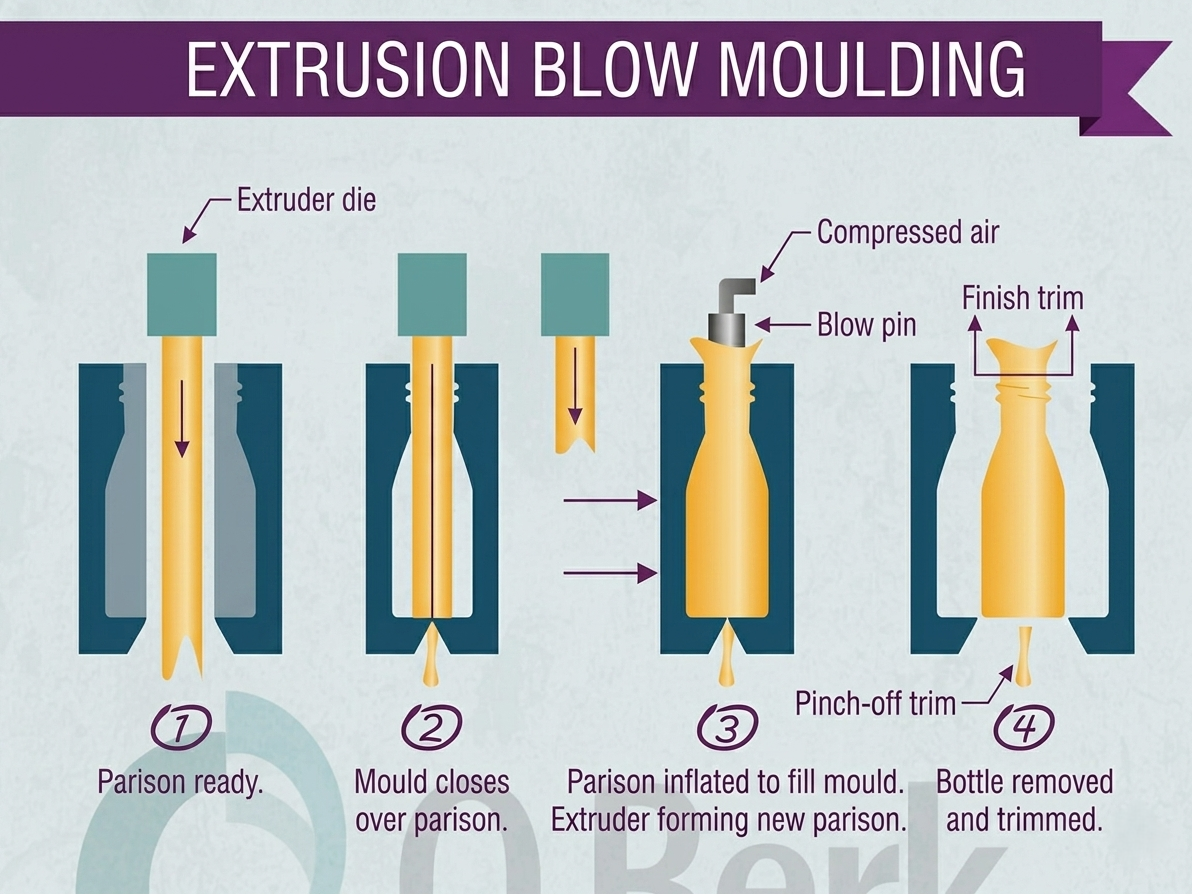
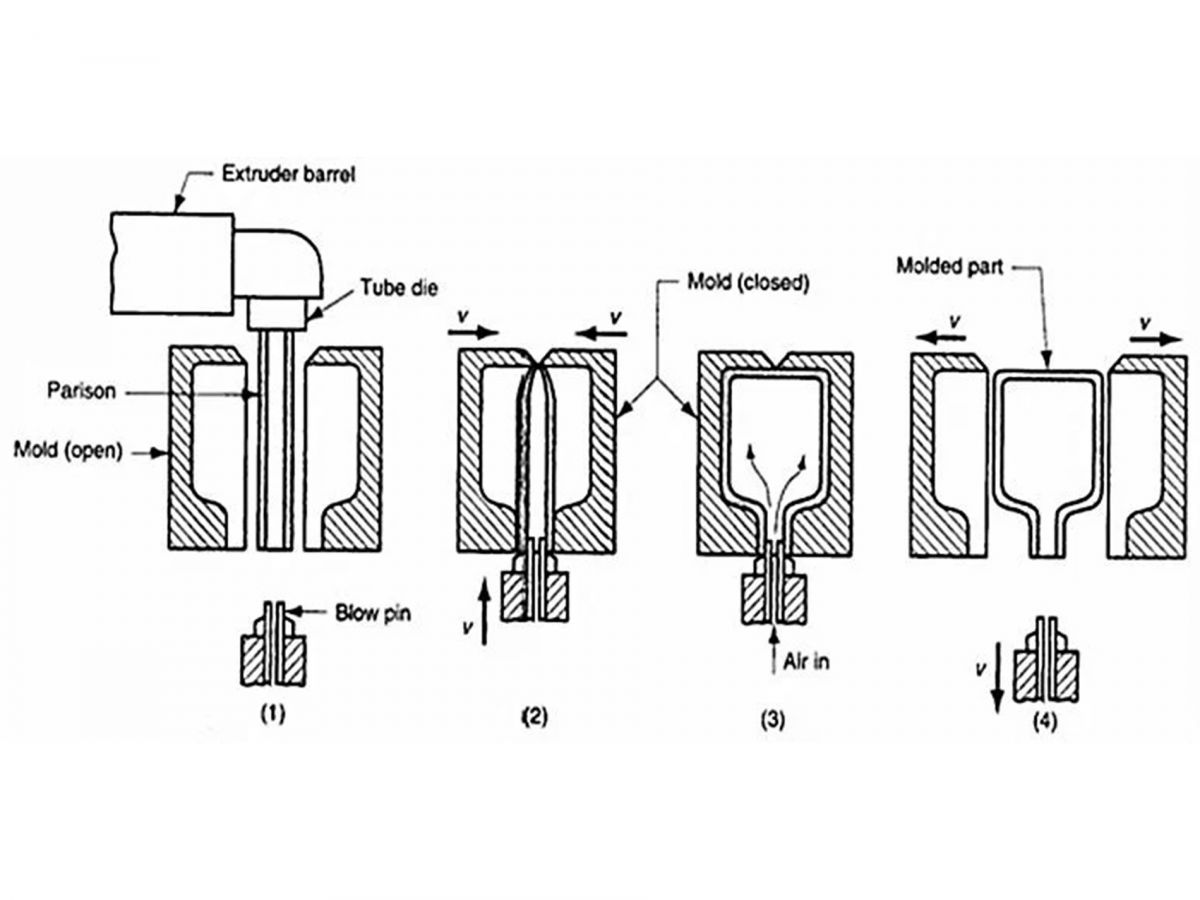
The Extrusion Blow Moulding ia a process that starts by melting plastic resin and then extruding it into a hollow tube-like shape called a parison. Then, clamp the parison into a mold, and blow air into it, compelling the plastic to adopt the mold’s shape. Once the cooling is completed, the mould opens and the product ejected and finished by trimming the ends.
This process is commonly used for producing bottles, containers, and drums.
The parison can be extruded either continuously, with the mould closing around it as it is produced, or intermittently, using a reciprocating screw or accumulator head that extrudes a discrete shot of material for each cycle.
When the mould closes, its edges pinch and seal the bottom of the parison, while any excess material (flash) is trimmed away and can often be reground and reused.
Wall thickness can be varied along the parison's length, a technique known as parison programming, to reinforce specific areas of the finished part, such as handles or the base, while minimising material use elsewhere.
The process is also well suited to multilayer extrusion, allowing barrier or recycled-content layers to be combined with virgin resin to enhance product protection or sustainability.
L’Extrusion Blow Moulding è un processo che parte dalla fusione di una resina plastica e nella sua estrusione in uno spezzone di tubo che costituisce il "precursore" (parison). Successivamente questo viene pinzato dai 2 semigusci che costituiscono lo stampo e viene soffiata aria al suo interno per fargli prendere la forma della cavità. Una volta raffreddato, lo stampo si riapre e il prodotto estratto e finito rifilando le estremità.
Processo comunemente usato per la produzione di bottiglie, flacconi e fusti.
Il parison può essere estruso in modo continuo, con lo stampo che si chiude attorno ad esso mentre viene prodotto, oppure in modo intermittente, utilizzando una vite alternativa o una testa ad accumulo che estrude una quantità discreta di materiale per ogni ciclo. Alla chiusura dello stampo, i bordi pizzicano e sigillano la base del parison, mentre il materiale in eccesso (flash) viene rimosso e può essere rimacinato e riutilizzato.
Lo spessore della parete può essere variato lungo la lunghezza del parison, tecnica nota come programmazione del parison (parison programming), per rinforzare aree specifiche del pezzo finito, come maniglie o base, riducendo al contempo l'uso di materiale nelle zone meno sollecitate.
Il processo si presta inoltre bene all'estrusione multistrato, che consente di combinare strati barriera o contenenti materiale riciclato con resina vergine, migliorando la protezione del prodotto o la sostenibilità.
Categoria merceologica
Categoria merceologica