
Ethylene Vinyl Alcohol (EVOH)
Etilene Vinil Alcool (EVOH)
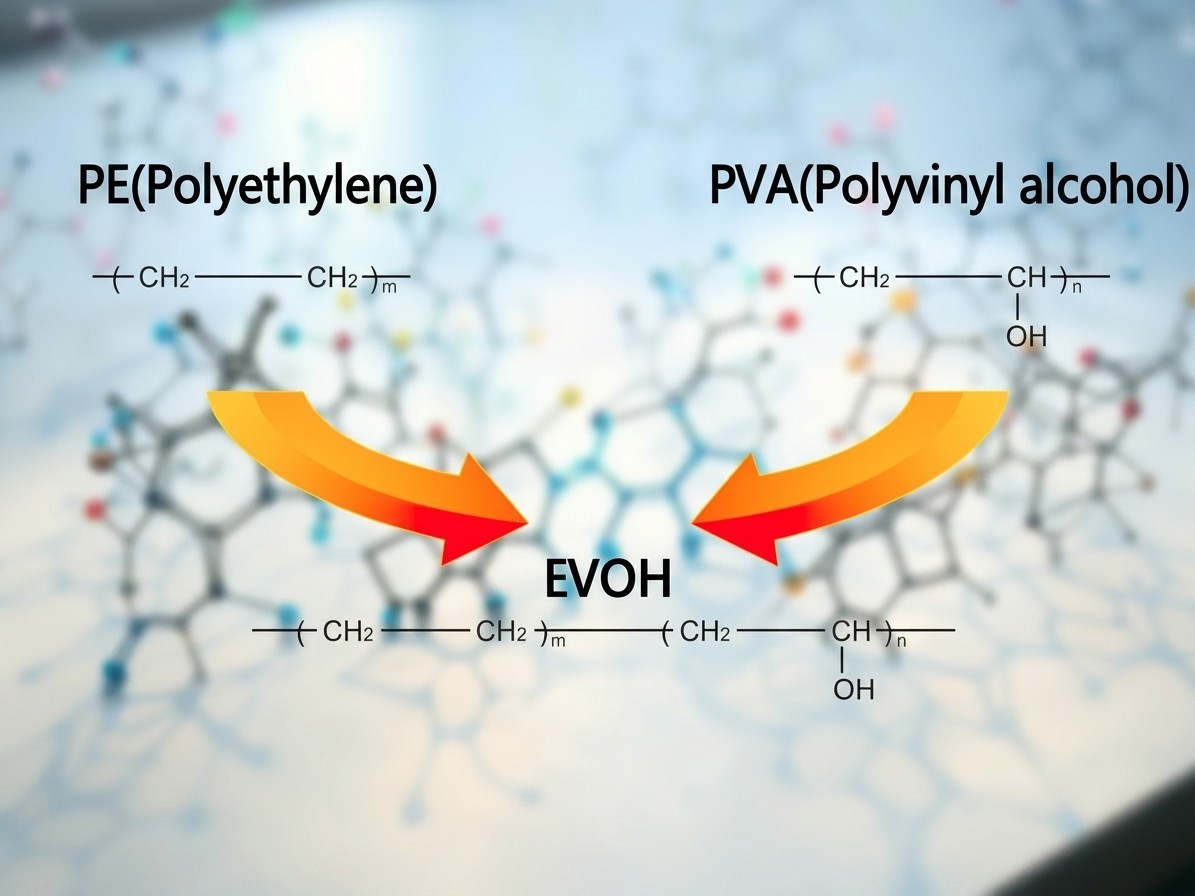
Ethylene vinyl alcohol is a copolymer obtained by the copolymerisation of ethylene and vinyl acetate followed by hydrolysis, whose composition, expressed as the molar percentage of ethylene (typically 27-48 mol%), determines a balance between gas barrier performance and processability.
At low ethylene content it offers exceptionally high oxygen barrier, superior to any other commodity thermoplastic used in packaging.
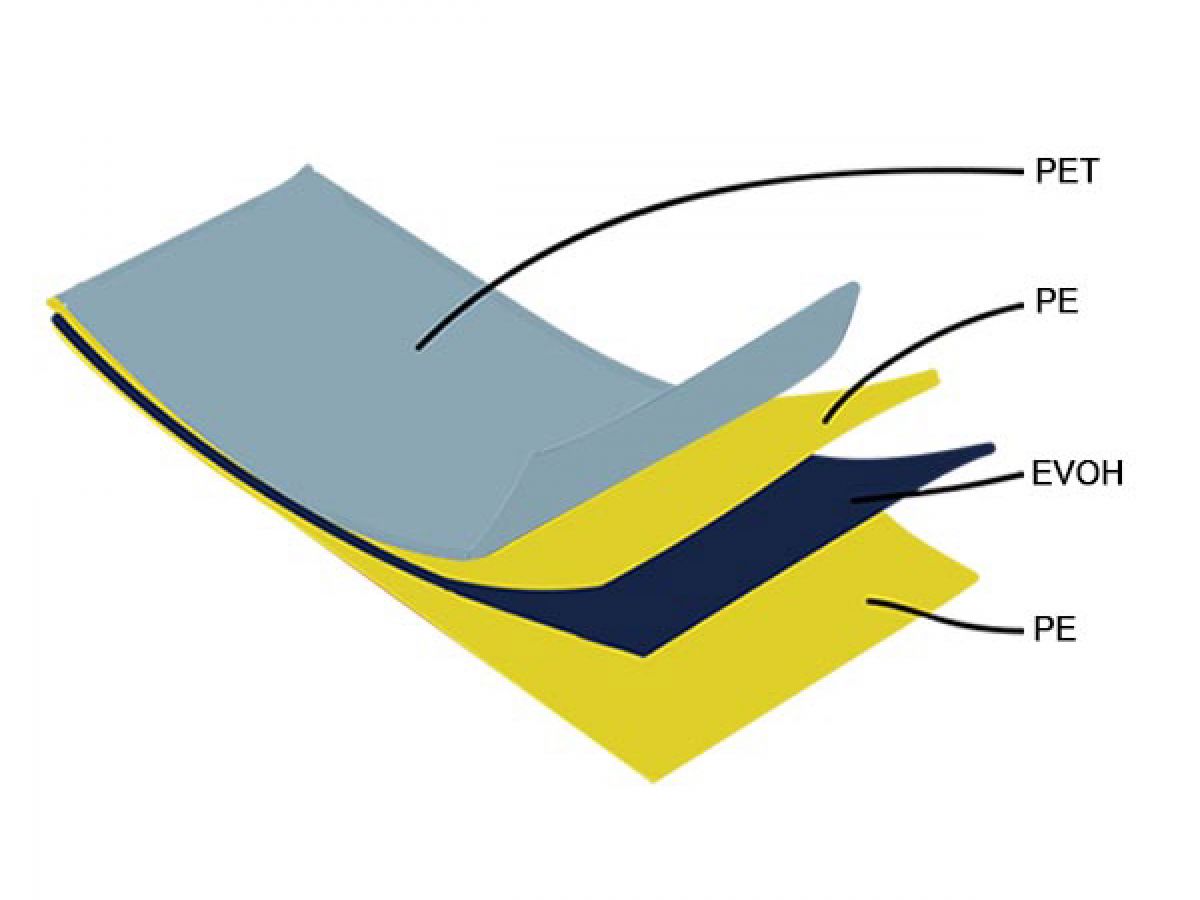
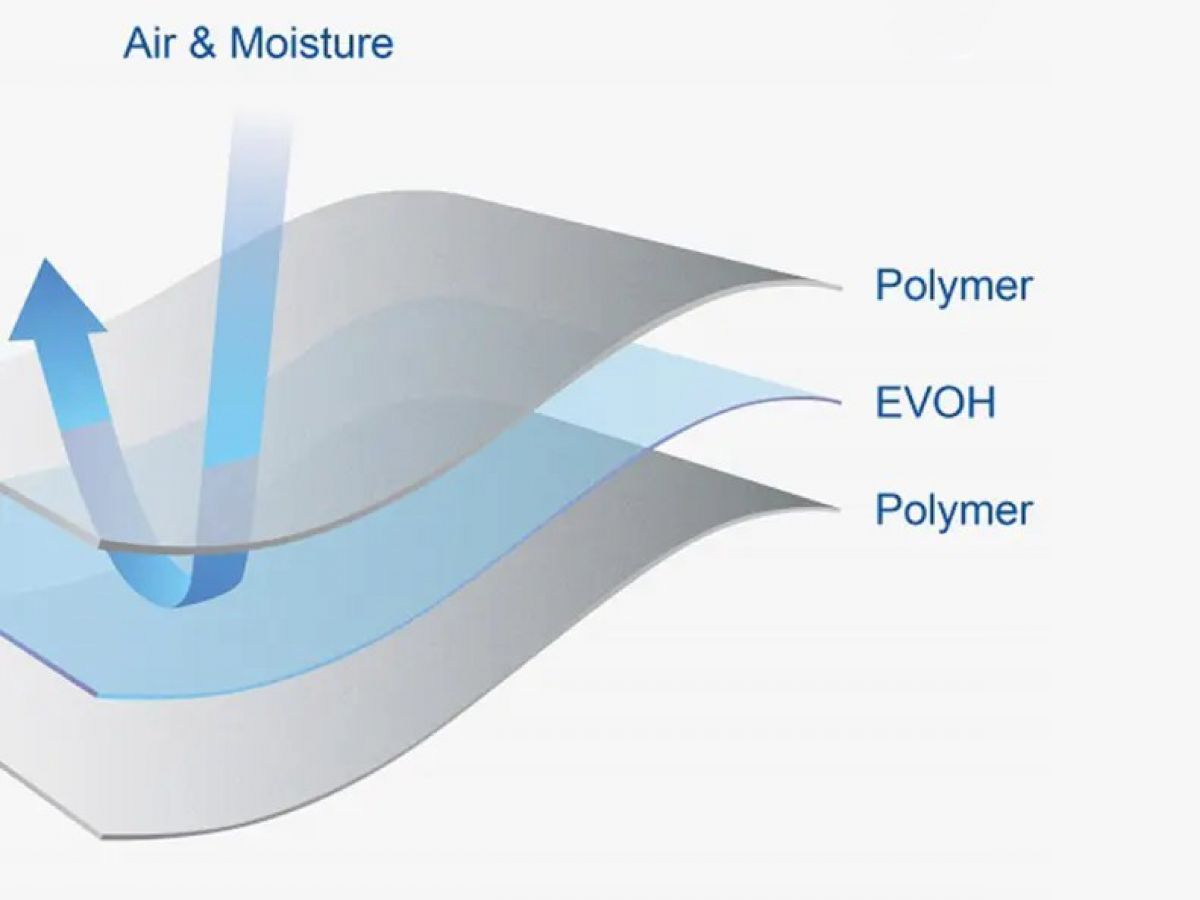
A critical limitation is that barrier performance degrades significantly in the presence of moisture: EVOH therefore always requires the protection of hydrophobic layers (PE, PP) within multilayer structures, which shield it from moisture absorption.
In packaging, it is used almost exclusively as an internal barrier layer in coextruded films or rigid coextruded packaging: structures for long-shelf-life food products, modified-atmosphere packaging (MAP), multilayer bottles (HDPE/EVOH/HDPE), thermoformed trays, tubes and stand-up pouches for oxygen-sensitive products. It is not used as a standalone film or in single-component injection moulding.
The principal commercial grades are EVAL (Kuraray) and Soarnol (Mitsubishi Chemical Group).
Its presence in multilayer structures is central to ongoing industry and regulatory debate on the recyclability of flexible and semi-rigid packaging.
Typical thickness as internal barrier layer within coextruded structures: 3-10 µm (up to 15 µm in high-performance applications).
L'etilene vinil alcool è un copolimero ottenuto per copolimerizzazione dell'etilene e dell'acetato di vinile seguita da idrolisi, la cui composizione, espressa come percentuale molare di etilene (tipicamente 27-48 mol%), determina un bilanciamento tra proprietà barriera ai gas e lavorabilità. A basso contenuto di etilene offre barriera all'ossigeno eccezionalmente elevata, superiore a qualsiasi altra plastica termoplastica di comune impiego nel packaging.
La barriera si degrada significativamente in presenza di umidità: l'EVOH richiede pertanto sempre la protezione di strati idrofobici (PE, PP) in strutture multistrato, che ne schermano l'assorbimento d'acqua.
Nel confezionamento è impiegato quasi esclusivamente come strato barriera interno in film coestrusi o in packaging rigido coestruso: strutture per alimenti a lunga conservazione, imballaggi in atmosfera modificata, bottiglie multistrato (HDPE/EVOH/HDPE), vaschette termoformate, tubetti e sacchetti stand-up per prodotti sensibili all'ossigeno. Non viene impiegato come film autonomo né in stampaggio a iniezione monocomponente.
Le principali marche commerciali sono EVAL (Kuraray) e Soarnol (Mitsubishi Chemical Group). La sua presenza in strutture multistrato è al centro del dibattito sulla riciclabilità degli imballaggi flessibili.
Spessori tipici come strato barriera interno in strutture coestrus: 3-10 µm (raramente fino a 15 µm in applicazioni ad alte prestazioni).
Fornitori di materiali
—
—