
Heat Sealable Paper
Carta termosaldante
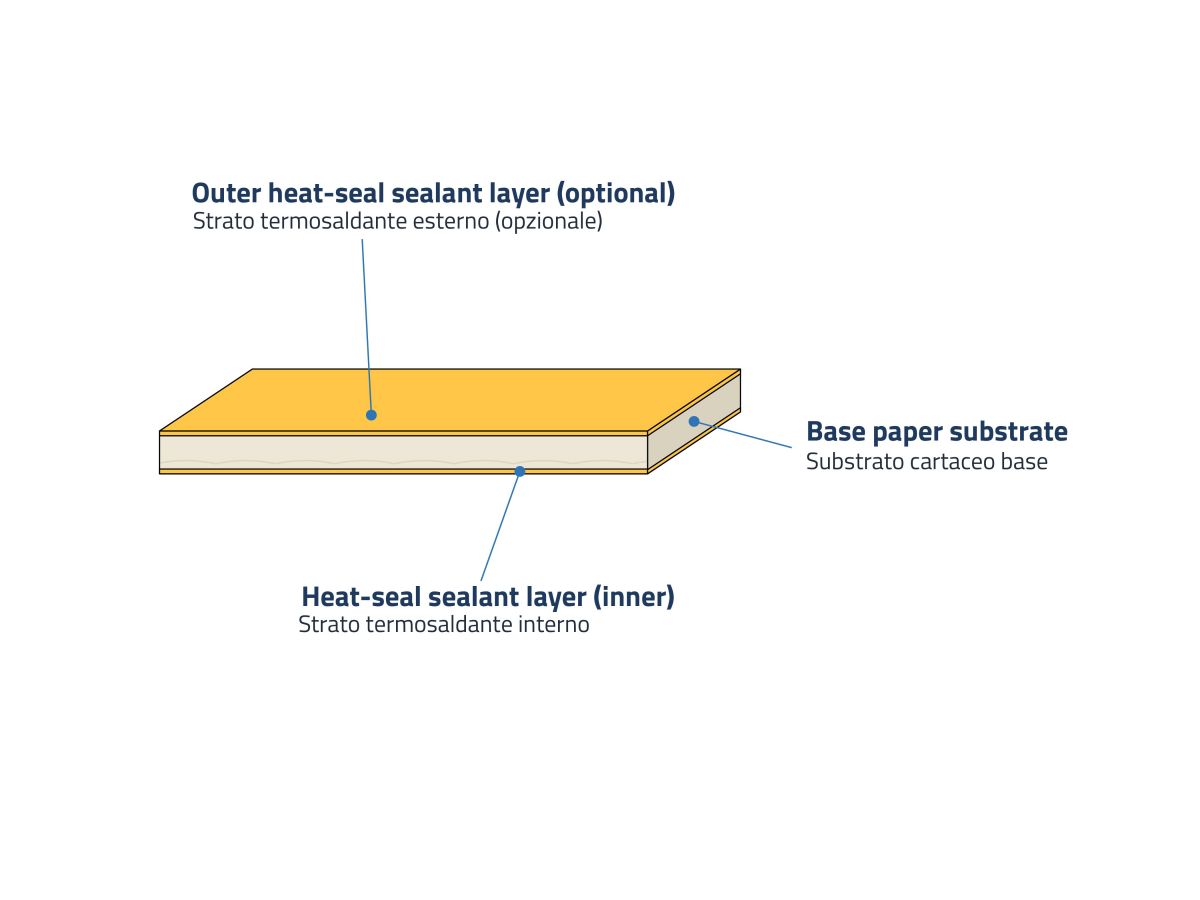
Heat sealable paper is a paper substrate coated with a layer that, when activated by heat and pressure, allows the formation of a hermetic seal without the use of separate glue or adhesive. The sealing layer may be a polymer coating (often acrylic or PE based) or a heat-activatable ink/lacquer applied selectively. It is a special case of barrier paper where the coating's primary function is sealability at defined temperatures.
In packaging, heat sealable paper is used for tea and coffee sachets, flow-wrap food packs, and top-webs for pharmaceutical blisters.
Typical grammages range from 40 to 90 g/m², with indicative thicknesses of 45-100 µm and sealing temperatures between 100 and 180°C.
Current trends, driven by the replacement of plastic films, favour coating formulations that are recyclable in the paper stream and have a lower environmental impact.
La carta termosaldante è un substrato cartaceo rivestito con uno strato che, attivato dal calore e dalla pressione, consente la formazione di una saldatura ermetica senza l'uso di colla o adesivi separati. Lo strato sigillante può essere un coating polimerico (spesso a base acrilica o PE) o un inchiostro/lacca termoattivabile applicato selettivamente. È un caso particolare di carta barriera dove la funzione primaria del rivestimento è la sigillabilità a temperature definite.
Nel packaging la carta termosaldante è impiegata per bustine di tè e caffè, confezioni flow-pack alimentari, e top-web per blister farmaceutici.
Le grammature tipiche sono comprese tra 40 e 90 g/m², con spessori indicativi di 45-100 µm e temperature di saldatura indicative tra 100 e 180°C.
Le tendenze attuali, spinte dalla sostituzione di film plastici, privilegiano formulazioni di coating riciclabili in filiera carta e a basso impatto ambientale.
Famiglia morfologica