
Greaseproof Paper
Carta resistente al grasso
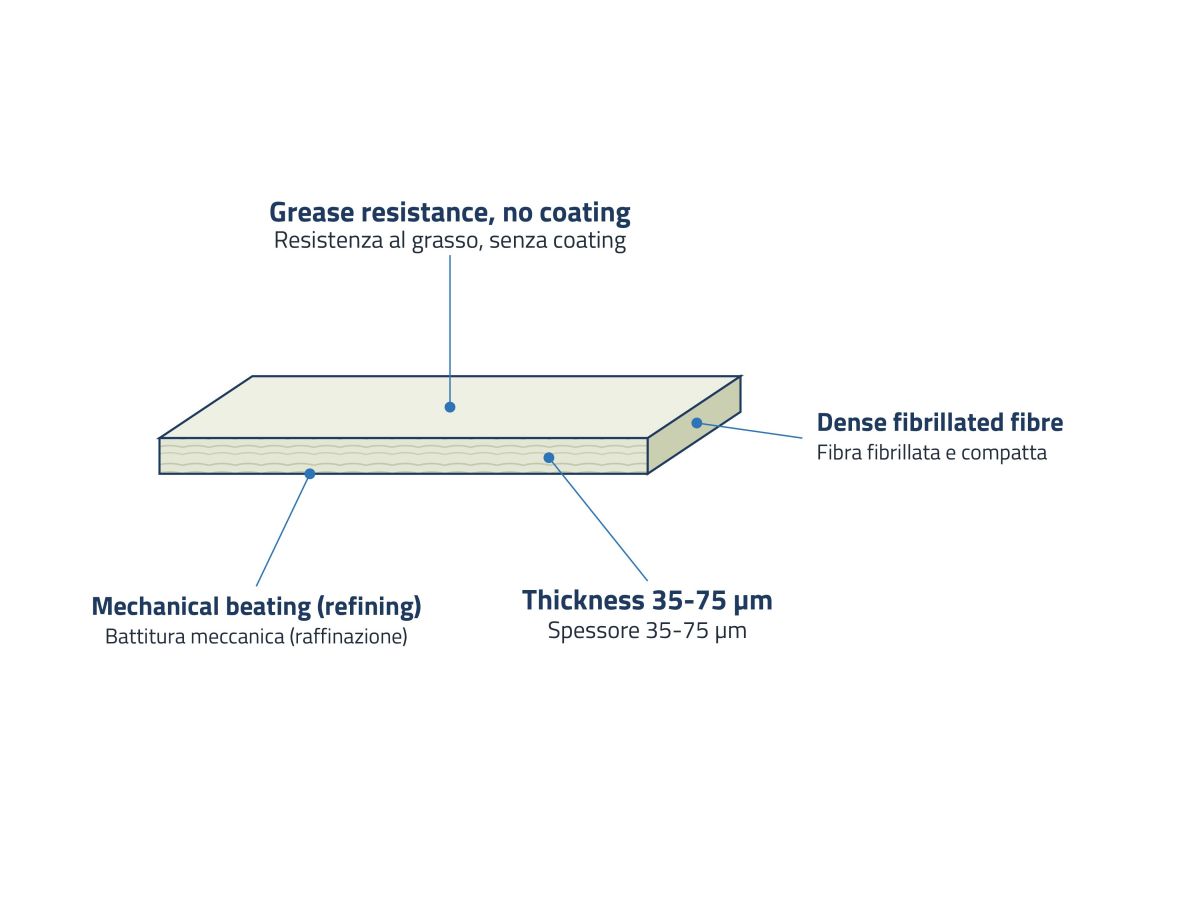
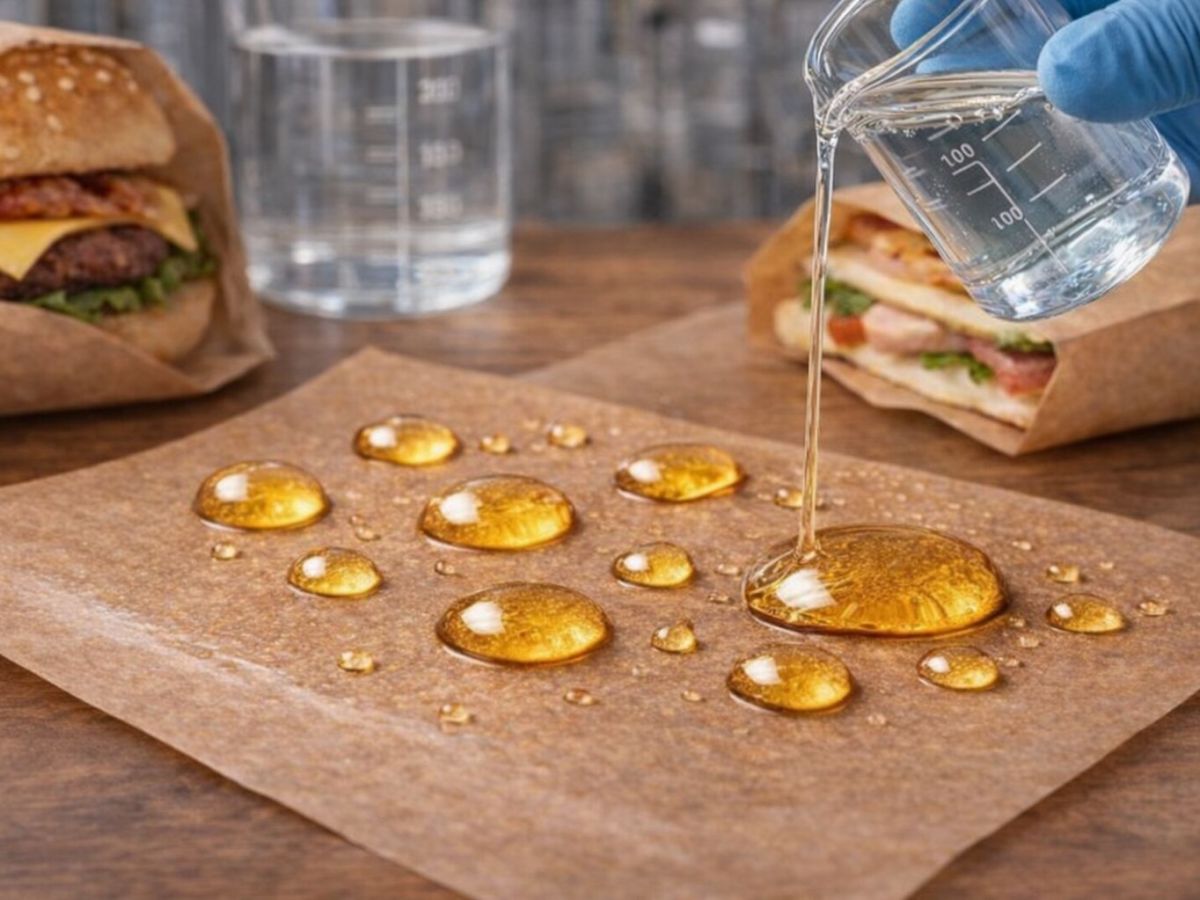
Greaseproof paper is a paper without additional barrier coatings, produced by subjecting the pulp to intense mechanical beating/refining that fibrillates the cellulose fibres and increases surface density, reducing the capillary pathways through which oil could migrate. It is not waterproof nor boil-resistant, but it offers good resistance to the passage of fats and oils at ambient or moderate temperatures.
In packaging, greaseproof paper is used for wrapping oily snack foods, light baking paper and quick-service food packs.
Typical grammages range from 30 to 55 g/m², with thicknesses of 35-75 µm.
The current trend, driven by increasingly strict PFAS regulations, is towards greaseproof technologies free of fluorochemical treatments (e.g. FluoroFree®), which achieve grease resistance solely through the physical fibre structure.
La carta resistente al grasso (greaseproof) è una carta priva di rivestimenti barriera aggiuntivi, ottenuta sottoponendo la pasta a un'intensa azione meccanica di battitura (beating/refining) che fibrilla le fibre di cellulosa e ne aumenta la densità superficiale, riducendo i percorsi capillari attraverso cui l'olio potrebbe migrare. Non è impermeabile all'acqua né resistente all'ebollizione, ma offre una buona resistenza al passaggio di grassi e oli a temperatura ambiente o moderata.
Nel packaging la carta greaseproof è impiegata per il wrapping di snack e prodotti oleosi, carta da forno leggera e confezioni fast food.
Le grammature tipiche sono comprese tra 30 e 55 g/m², con spessori di 35-75 µm.
La tendenza attuale, guidata da normative sempre più stringenti sui PFAS, è verso tecnologie greaseproof prive di trattamenti fluorurati (es. FluoroFree®), che ottengono la resistenza al grasso esclusivamente tramite la struttura fisica della fibra.
Famiglia morfologica
Riferimento bibliografico
Holik, Herbert, (2013) Handbook of Paper and Board, John Wiley & Sons, Incorporated