
Seaming
Aggraffatura
Seaming is the process of creating a hermetic “double seam” by mechanically interlocking the flange of the can body with the curled edge of the lid (end) using seaming rolls and a chuck. This ensures the can is airtight and safe for food, beverage, or aerosol packaging.
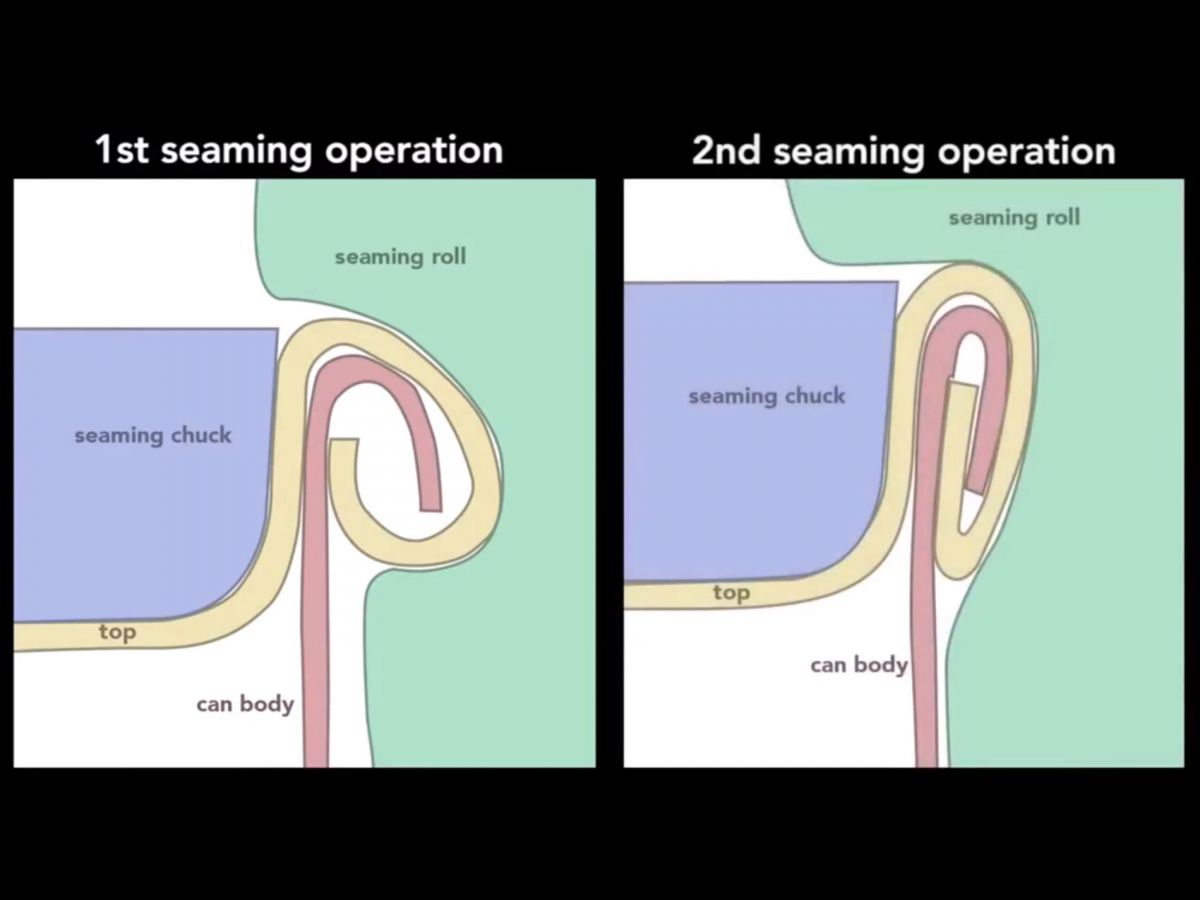
The double seam is formed in two sequential operations, both carried out with the can held firmly against a seaming chuck:
- in the first operation, a seaming roll with a profiled groove curls the lid's hook and the body flange together into a loose, rounded interlock, without yet compressing them tightly;
- in the second operation, a flatter seaming roll presses and flattens this interlock, tightly compressing the multiple layers of metal (typically five or six) into a compact, uniform double seam that provides both mechanical strength and a hermetic closure.
A sealing compound is normally applied to the lid's curl before seaming, filling any residual gaps between the interlocked layers and ensuring the seam remains leak-tight under internal pressure and throughout the product's shelf life.
L'aggraffatura (seaming) è il processo di creazione di una "doppia cucitura" ermetica, ottenuta interbloccando meccanicamente la flangia del corpo del contenitore con il bordo arricciato del coperchio (fondello), mediante rulli di aggraffatura e un mandrino. Questo garantisce che il contenitore sia a tenuta d'aria e sicuro per il confezionamento di alimenti, bevande o aerosol.
La doppia cucitura viene realizzata in due operazioni sequenziali, entrambe eseguite tenendo il contenitore saldamente premuto contro il mandrino di aggraffatura:
- nella prima operazione, un rullo di aggraffatura con una gola sagomata arriccia insieme il gancio del coperchio e la flangia del corpo, formando un interblocco arrotondato non ancora compresso strettamente;
- nella seconda operazione, un rullo di aggraffatura più piatto preme e appiattisce questo interblocco, comprimendo strettamente i molteplici strati di metallo (tipicamente cinque o sei) in una doppia cucitura compatta e uniforme, che garantisce sia resistenza meccanica sia chiusura ermetica.
Prima dell'aggraffatura viene generalmente applicato un composto sigillante sul bordo arricciato del coperchio, che riempie eventuali spazi residui tra gli strati interbloccati, assicurando che la cucitura sia a tenuta anche in presenza di pressione interna e per l'intera durata di conservazione del prodotto.
Reference Sector
Reference Sector
Reference
Yam, K. L. (Ed.). (2009). Encyclopedia of Packaging Technology (3rd ed.). Wiley.