
Fiber Based Layer / Plastic Film Laminate
Accoppiato carta / Film plastico
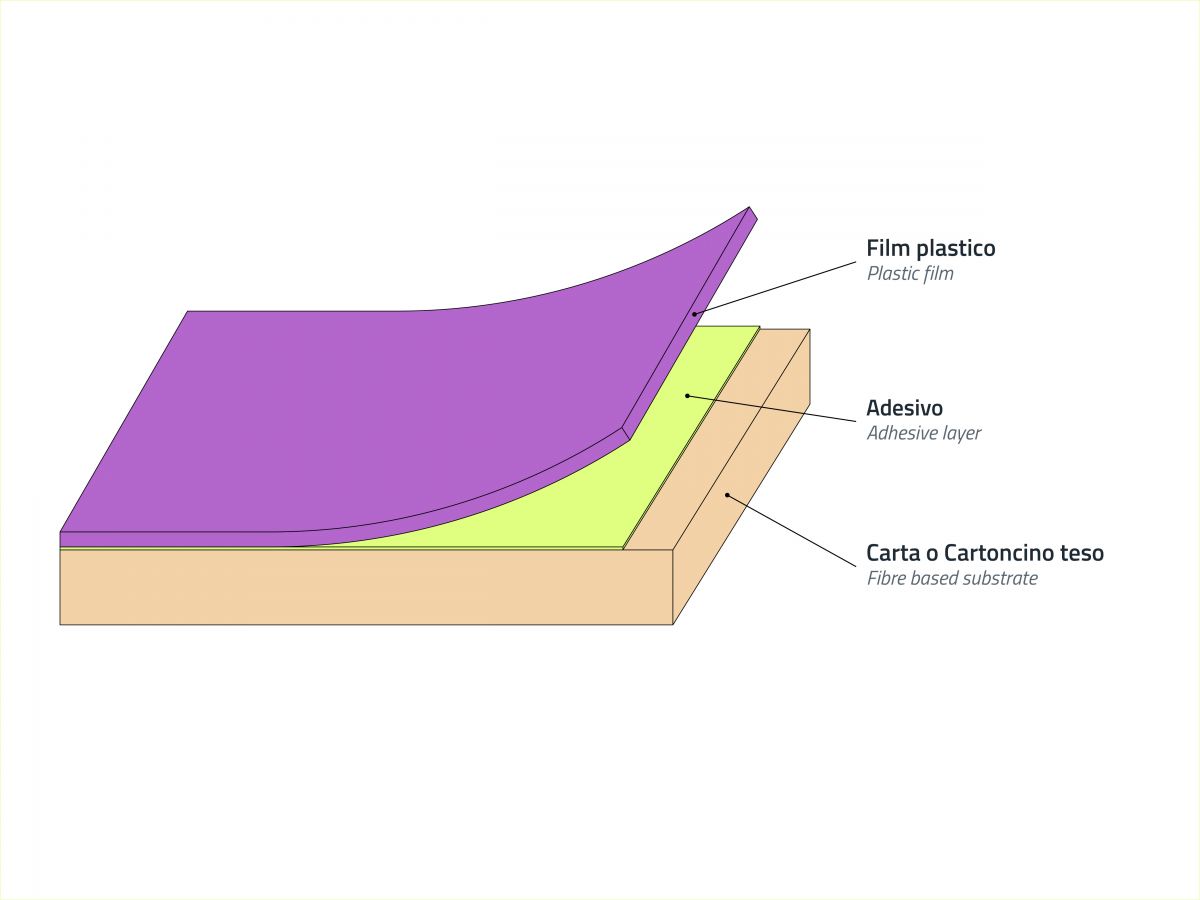
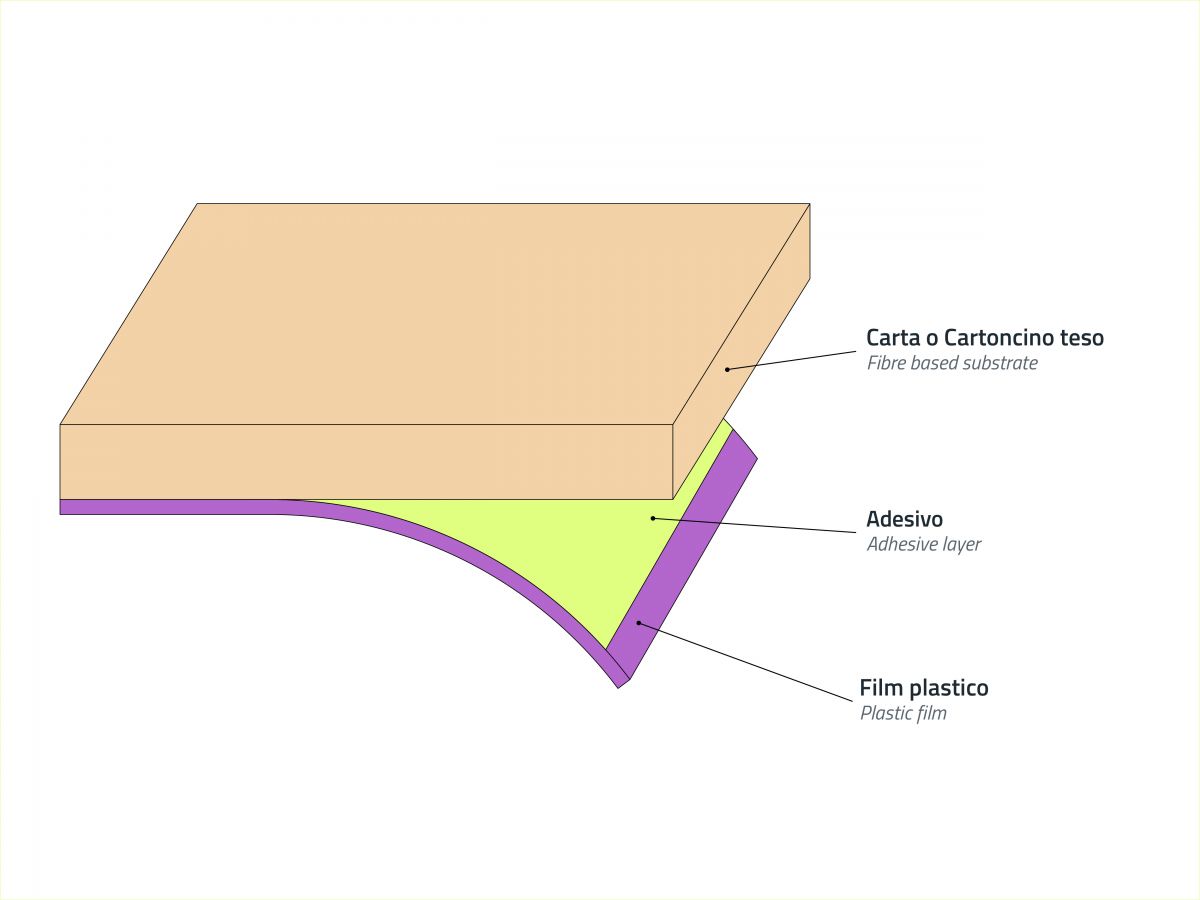
A fibre-based layer / plastic film laminate is a laminated material produced by combining a cellulose-based substrate, paper or paperboard, with one or more plastic films, including polyethylene (PE), polypropylene (PP), or polyethylene terephthalate (PET), the latter also available in metallised form.
The substrates are bonded by adhesive lamination (solventless, water-based, or hot melt processes) or by extruding the polymer directly onto the fibre substrate. The cellulose layer provides printability, rigidity, and body; the plastic film adds moisture and grease barrier, heat-sealability, and mechanical resistance.
The most common structures include
- paper/PE for food sachets and wraps,
- paper/PP for high-performance packaging,
- paper/metallised PET for oxygen and moisture barrier,
- and paperboard/PE or paperboard/PP for beverage containers, dry foods, and chilled packaging.
A functional coating, such as a heat-seal layer, may be applied to either outer surface. The material is principally used in food, cosmetic, and industrial packaging.
Typical grammages and gauges: paper 50-150 g/m² (60-140 µm); paperboard 180-350 g/m² (250-400 µm); film 9-50 µm.
L'accoppiato carta / film plastico è un materiale laminato ottenuto combinando uno strato a base cellulosica — carta o cartoncino — con uno o più film plastici, tra cui polietilene (PE), polipropilene (PP) o polietilene tereftalato (PET), anche in versione metalizzata.
I substrati vengono uniti per laminazione adesiva (processi solventless, a base acquosa o hot melt) oppure per estrusione del polimero direttamente sulla fibra. Lo strato cellulosico conferisce stampabilità, rigidità e struttura; il film plastico aggiunge barriera a umidità e grassi, saldabilità termosaldante e resistenza meccanica.
Le strutture più diffuse comprendono
- carta/PE per sacchetti e involucri alimentari
- carta/PP per packaging ad alte prestazioni,
- carta/PET metalizzato per barriera all'ossigeno e all'umidità
- cartoncino/PE o cartoncino/PP per contenitori per bevande, alimenti secchi e confezionamento refrigerato.
Su ciascuna superficie esterna può essere applicato un rivestimento funzionale aggiuntivo, come uno strato termosaldante. Il materiale è destinato principalmente al packaging alimentare, cosmetico e industriale.
Grammature e spessori tipici: carta 50-150 g/m² (60-140 µm); cartoncino 180-350 g/m² (250-400 µm); film 9-50 µm.
Morphological Family